Storms can pass in a matter of hours, but the damage they leave behind can take weeks, months or even years to become apparent.
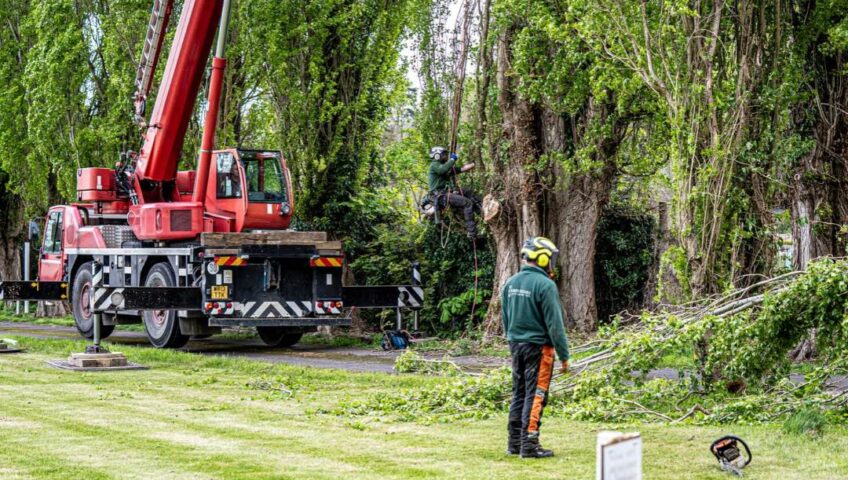
Recent storms Austen and Boelo brought strong winds and heavy rain to parts of south-east England in late October, causing travel disruption and bringing down trees in affected areas. Over the last few days we have been busy helping clients with a clean-up operation, in this month’s blog we thought we would explore this topic further and share some advice on the risks of ignoring storm-damaged trees.
The unsettled weather is a timely reminder for homeowners, businesses and estate managers across Berkshire and the Thames Valley to check their tress for signs of damage and address any safety concerns. While some damage is immediately obvious, other problems can be harder to spot, a cracked branch, newly exposed root system or a tree that has started to lean could indicate a more serious issue.
So, what should you do if your trees have been affected by the storms and why is it important not to ignore the warning signs?
1. Put safety first after a storm
If you suspect a tree has been damaged during the recent storms, keep your distance until it has been assessed. High winds can leave branches partially detached, trunks split or trees unstable at the roots. Even a tree that is still standing may be at risk of falling, particularly if the ground has become saturated following heavy rain. Never attempt to cut down a hanging branch, remove a fallen tree or climb a damaged tree yourself because branches under tension can move unexpectedly, while fallen trees may shift as they are cut.
If a tree is touching or close to power lines, do not approach it but contact the relevant electricity network operator. If there is an immediate danger to people, property, or if a tree is blocking a public road or creating an immediate hazard, report it to the relevant local authority or emergency service as appropriate. A tree does not have to fall to present a danger, if you suspect structural damage, arrange for a professional tree survey assessment before carrying out any work.
2. What signs of storm damage should you look for?
Once conditions are safe, take a careful look around your property. You do not need to get close to a tree or climb it to spot some of the common warning signs, we share a few to look out for below.
Broken or hanging branches: Look for branches that have snapped, are hanging or have become caught in the canopy. Smaller broken branches can be a sign of more substantial damage higher up the tree.
Cracks in the trunk or major limbs: Splits in the trunk or where large branches join the main stem can indicate structural weakness. These should be assessed by a qualified tree surgeon, particularly where the tree stands near buildings, roads, car parks or areas used by the public.
A leaning tree or disturbed roots: Has a tree suddenly started leaning, or can you see the soil lifting or cracking around its base? These can be signs that the root plate has moved and the tree may be unstable.
Fallen branches or debris: A scattering of branches after high winds may be nothing to worry about in isolation. However, larger fallen limbs or repeated branch loss could indicate a tree that needs closer inspection.
Not all storm damage is obvious from the ground. Cracks can develop high in the canopy, while existing weaknesses may worsen after repeated periods of strong wind and rain. If you are unsure whether a tree is safe, this is where we can help, we can inspect trees to ensure it has come through the storm unscathed.
3. Why dead, diseased and dangerous trees should not be ignored
Storm damage is not always the starting point of a tree problem, in many cases, high winds expose weaknesses that have been developing for some time. A dead, diseased or structurally compromised tree may be more vulnerable to branch failure or collapse, depending on its condition, location and the surrounding environment. That is why routine tree inspections and planned maintenance are so important.
Dead branches, fungal growth, visible cavities or decay, bark damage or changes in the canopy are all warning signs that the tree might not be structurally sound. These signs do not automatically mean a tree needs to be removed, in many cases, appropriate pruning, monitoring or other management measures may be sufficient. The important thing is understanding the risk and choosing the right course of action.
Putting off tree work may seem like a sensible way to manage costs, particularly when budgets are tight. However, leaving a potentially dangerous tree unchecked can prove far more expensive in the long run, otherwise it might lead to property damage, personal injury, business disruption, emergency clearance costs or damage to surrounding grounds. The key message is simple: proactive tree management is an investment in safety, protecting your property and avoiding unnecessary disruption.
4. When should you call a professinal tree surgeon or arborist?
If you have identified possible storm damage, or have concerns about a tree’s condition, we can help assess the tress to suggest what happens next. Depending on the findings from our tree survey or inspection, the recommended work might include removing damaged branches, reducing a particular limb, carrying out appropriate pruning, undertaking further investigation or, where necessary, removing the tree.
The right solution will depend on the tree’s age, condition, location and the level of risk. Not every damaged tree needs to be felled and retaining healthy trees wherever safely possible remains an important consideration. For trees subject to a Tree Preservation Order or located within a conservation area, permission or notification requirements may apply. There are some exceptions for dead or dangerous trees, but these have specific conditions.
5. Do not forget commercial grounds and equestrian properties
For businesses and organisations responsible for larger outdoor spaces, post-storm checks should form part of a wider grounds maintenance plan. Trees near car parks, visitor entrances, footpaths, playgrounds, schools, paddocks, stables and riding arenas deserve particular attention because of the people, vehicles and animals using these areas. After a period of high winds:
- Check access routes and paths for fallen branches and other hazards.
- Inspect boundary areas for damaged trees and broken limbs.
- Assess trees near buildings, lighting, fencing and outdoor facilities.
- Restrict access to areas where there may be an immediate risk.
- Arrange professional inspections where damage or deterioration is suspected.
- Record any concerns and the action taken, so that outstanding maintenance can be followed up.
Regular, planned maintenance can help identify developing problems before they become urgent, although no inspection can eliminate every risk posed by extreme weather.
6. Make tree checks part of your ongoing maintenance plan
While storms are a useful reminder to inspect your trees, it is worth taking a longer-term view. Trees change over time and a tree that appeared healthy a few years ago may now have deadwood, signs of disease, root disturbance or structural weaknesses that need attention. Changes in the surrounding environment, including construction work, soil compaction and waterlogged ground, can also affect tree health.
A planned maintenance programme should consider the condition of the trees on your land, their location, how frequently the surrounding areas are used and the potential consequences if a branch or tree were to fail. This does not mean removing every tree that presents a concern. Instead, it means making informed decisions, prioritising the areas of greatest risk and carrying out suitable work at the right time. A proactive approach can help protect your property, maintain attractive outdoor spaces and reduce the likelihood of being caught out by unexpected tree work.
Need help with storm-damaged trees?
We have been busy over the last few days responding to clients who are concerned about their trees and the recent storms are a timely reminder that tree safety should not be left until something goes wrong. Whether you are a homeowner concerned about a damaged tree, a business managing commercial grounds or an equestrian venue responsible for large outdoor spaces, dealing with tree problems early can help protect people, property and your budget.
At ANB we understand the importance of maintaining safe, well-managed outdoor spaces. Click HERE to learn more about our tree survey and inspections services, if you have noticed signs of storm damage or are concerned about a dead, diseased or potentially dangerous tree, get in touch with our friendly team to arrange a no-obligation site visit.