Autumn is one of the best times of year to care for our trees and this month we wanted to share more insight on tree fungi. The European Union’s Copernicus Climate Change Service reported that 2024 was the hottest year on record, globally and this year is likely to beat that record. The UK continues to experience rising temperatures, prompting questions on the impact this change is having on some of our tree species. In response to this we are seeing a general shift in the tree ecosystem, as not only are fungi associating with a widening range of tree hosts but the fruiting period for certain species is also increasing.
As the weather naturally becomes cooler and wetter at this time of year, fruiting bodies begin to appear on tree trunks, around the base of trees and across the surrounding ground. While the appearance of a mushroom or bracket fungus can be a sign that a tree is experiencing decay, it is important to remember that not all fungi are bad. In fact, fungi plays a vital role in our environment. Some work in partnership with trees, helping them access water and nutrients, while others help break down dead wood and return valuable nutrients to the soil. However, certain fungi can cause decay within a living tree, potentially affecting its health, stability and structural integrity. Here are seven common types of tree fungi to look out for this autumn.
1. Honey Fungus: A Fungus to Take Seriously
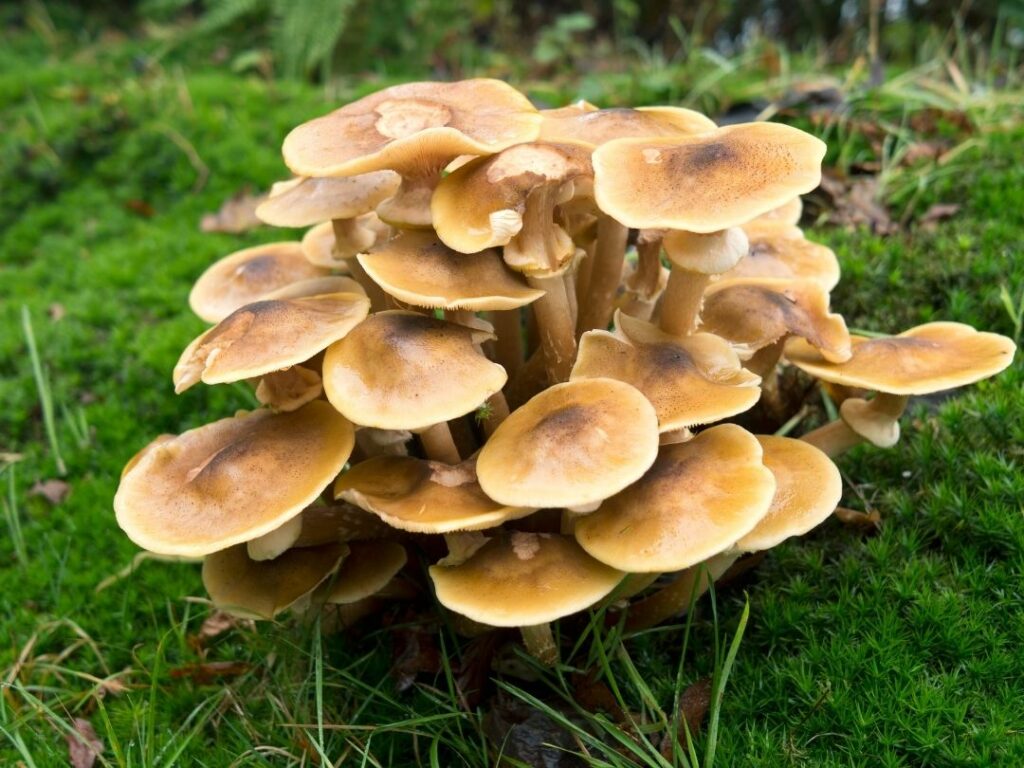
Honey fungus is one of the best-known fungi associated with tree decline. It can affect a wide range of trees and woody plants. It is often recognised by clusters of honey-coloured mushrooms appearing around the base of a tree or nearby in the autumn. The mushrooms themselves are only part of the story. Honey fungus can spread underground through structures known as rhizomorphs, sometimes referred to as bootlace-like strands. The fungus can attack the roots and lower parts of susceptible trees and shrubs, potentially leading to poor growth, dieback and in some cases, death.
What to look out for:
- Clusters of honey-coloured mushrooms around the base of a tree.
- Declining growth or dieback.
- White fungal growth beneath the bark.
- Dark, bootlace-like rhizomorphs beneath the bark or in the soil.
Image credit: “Honey Fungus” by Leonie Clough on Upsplash
2. Ganoderma: A Sign of Internal Decay
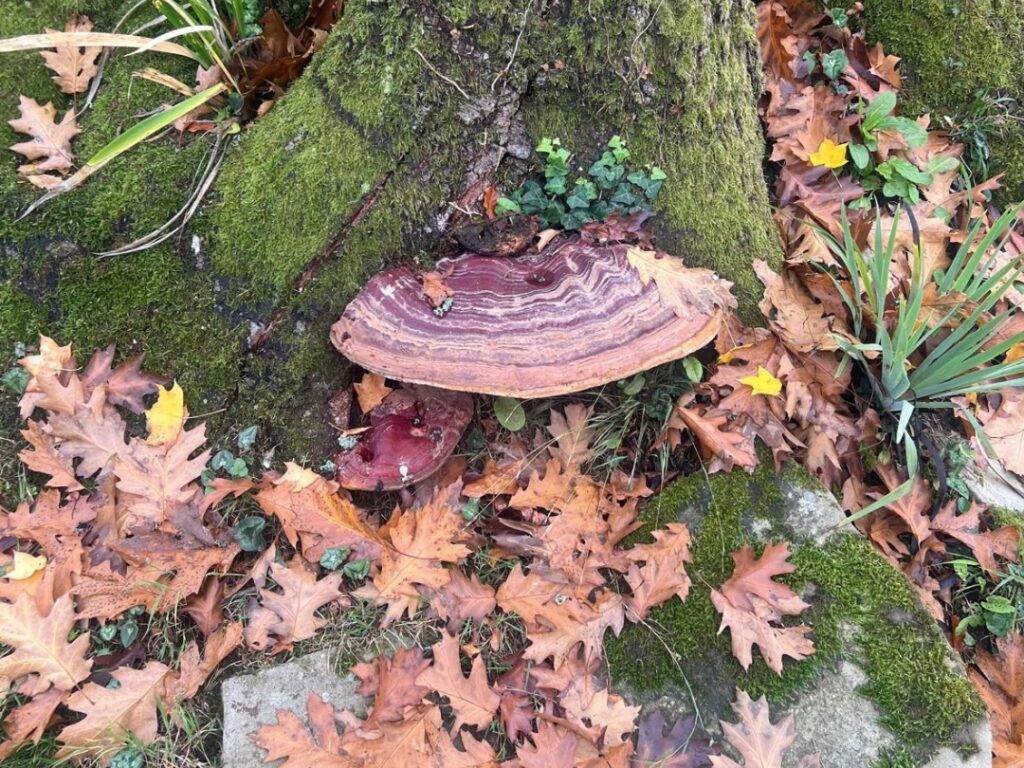
Ganoderma is a group of bracket fungi that can be found growing on a variety of broadleaf trees. Depending on the species, the fruiting bodies can appear as large, shelf-like brackets attached to the trunk or around the base of the tree. The presence of Ganoderma can indicate that decay is occurring within the tree. Some species are associated with root and butt decay, which can potentially affect the structural stability of the tree. It is important to remember that the presence of a fruiting body does not automatically mean that a tree is in danger, but it is an important indicator that further investigation is needed.
What to look out for:
- Large bracket-like fruiting bodies.
- Growth around the base or lower trunk.
- Signs of decay or cavities.
- Changes in the tree’s overall health or structure.
3. Meripilus: A Potential Concern at the Base of Trees
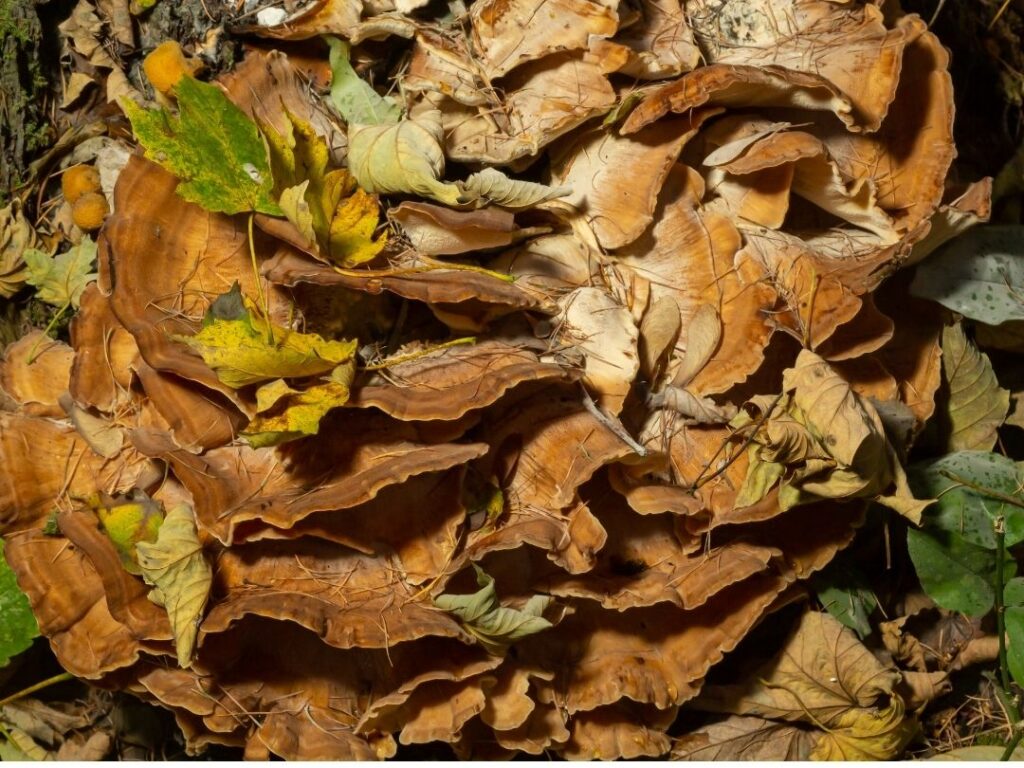
Meripilus giganteus, often known as the giant polypore, is commonly found at the base of mature broadleaf trees, particularly beech. Its large clusters of overlapping brackets can be impressive, sometimes appearing as a substantial rosette around the base of the trunk.
Meripilus can cause decay in the roots and lower stems of a tree. This means that although the canopy may still appear healthy, there could be significant changes taking place below ground. For trees located close to homes, roads, footpaths or other frequently used areas, the discovery of Meripilus should be taken seriously.
What to look out for:
- Large clusters of brown brackets.
- A rosette-like growth at the base of a tree.
- Commonly found around mature beech trees.
- Potential signs of root decay.
4. Chicken of the Woods: Beautiful but Worth Investigating
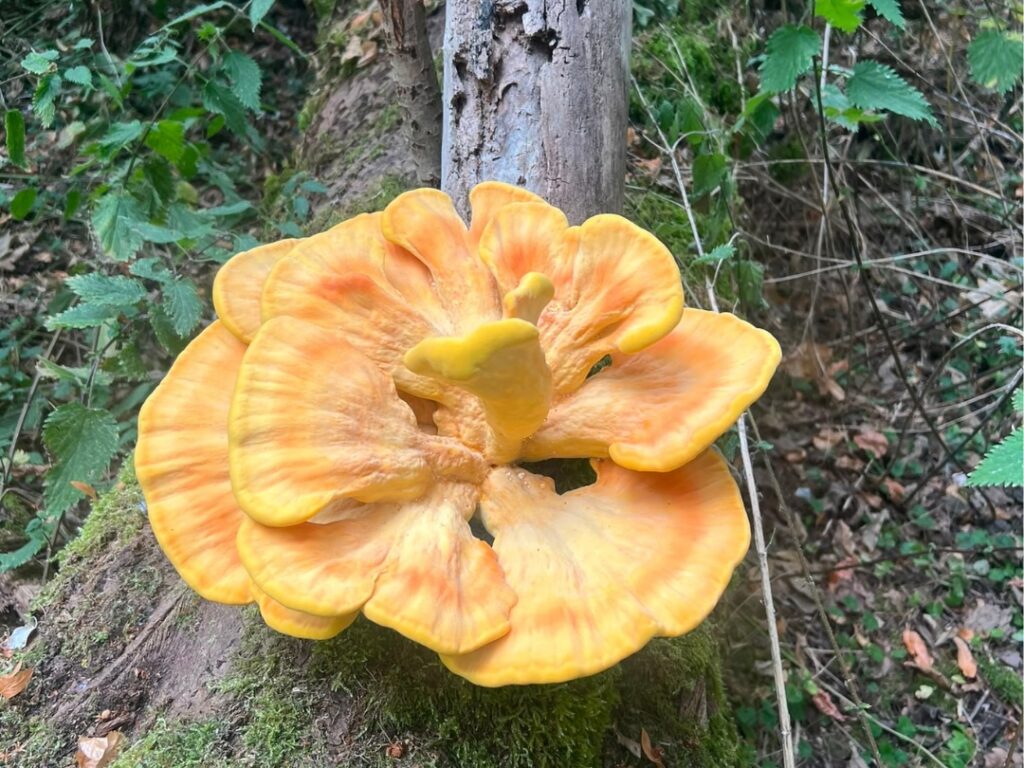
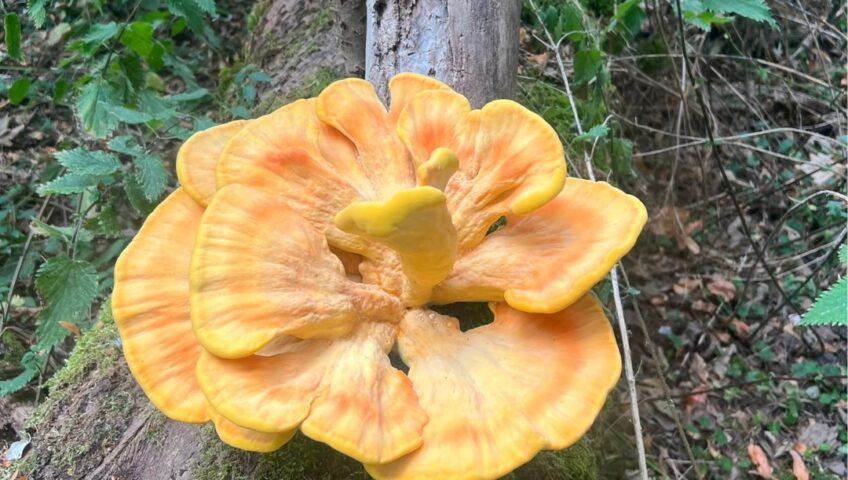
Chicken of the Woods is one of the most recognisable tree fungi thanks to its striking yellow and orange brackets. Often appearing in large, layered clusters, it can be found growing on both living and dead trees. While its colourful appearance makes it easy to spot, the presence of Chicken of the Woods can indicate decay within the tree. It is a ssociated with brown rot, which affects the wood and can alter its strength and structural properties.As with other fungi, the location of the tree is an important consideration. A fungus growing on an old tree in a woodland setting may require a very different approach to the same fungus appearing on a tree beside a house or busy footpath.
What to look out for:
- Bright yellow and orange shelf-like brackets.
- Large clusters growing from the trunk or major limbs.
- Fruiting bodies appearing during the warmer months and into autumn.
5. Hen of the Woods: An Important Indicator
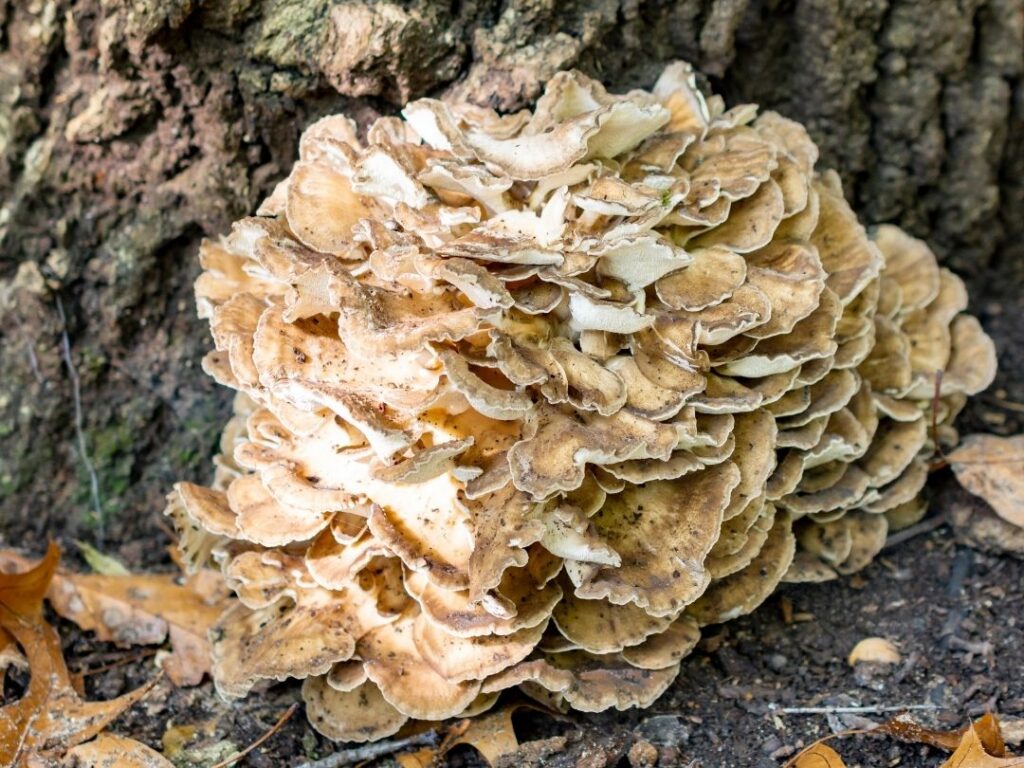
Hen of the Woods, also known as Grifola Frondosa, produces large clusters of grey-brown, leaf-like fronds, often around the base of mature trees. It is particularly associated with oak trees and can be an indicator of decay affecting the root system or lower parts of the tree.
The appearance of Hen of the Woods does not necessarily mean immediate action is required, but it can provide valuable information about what may be happening inside the tree. The key is to consider the fungus alongside the overall condition, location and structure of the tree.
What to look out for:
- Large clusters resembling overlapping leaves or feathers.
- Grey, brown or earthy-coloured fronds.
- Growth around the base of mature trees, particularly oak.
6. Birch Polypore: Nature’s Recycling Team
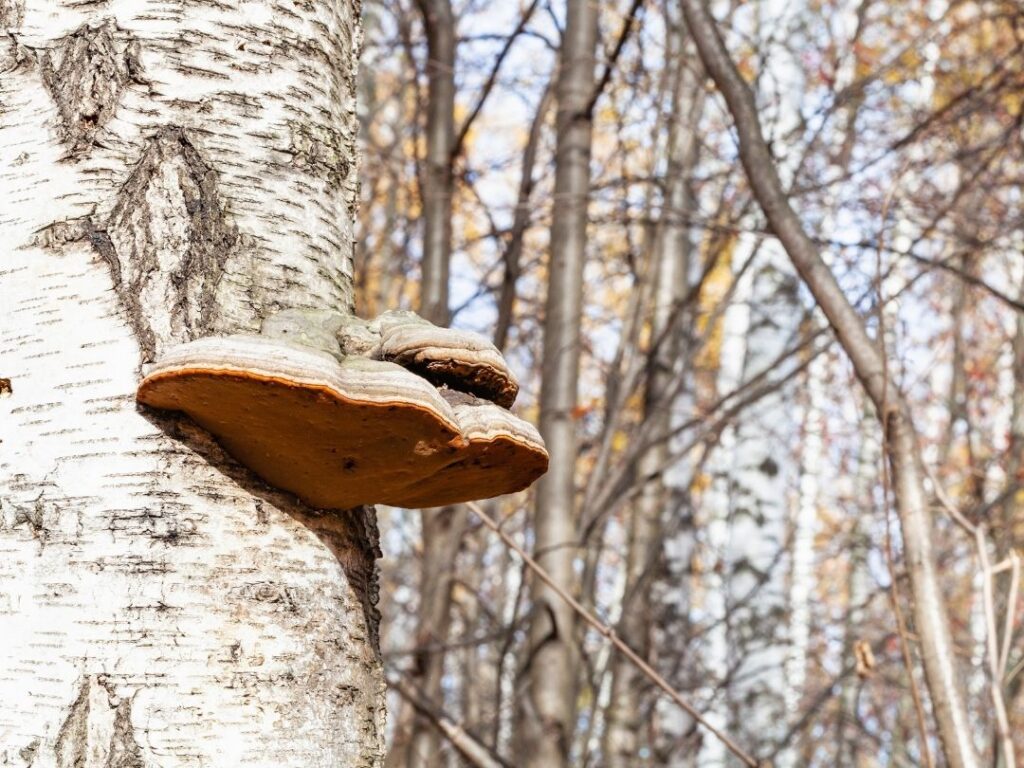
Not all fungi found on trees are a cause for concern. Birch polypore is commonly found on birch trees and plays an important role in breaking down dead and dying wood. It is usually seen as a pale, bracket-shaped fungus growing directly from the trunk.
This type of fungus is an excellent example of the important role fungi play within woodland ecosystems. By breaking down dead wood, fungi helps return nutrients to the soil and create habitats for insects and other wildlife. If Birch Polypore is found on a dead or declining tree, it is often simply part of the natural decomposition process.
What to look out for:
- Pale, rounded bracket fungi.
- Usually found on birch trees.
- Often associated with dead or dying wood.
7. Fly Agaric: A Familiar and Fascinating Woodland Fungus
With its bright red cap and distinctive white spots, Fly Agaric is one of Britain’s most recognisable fungi. Although it does not grow directly from the trunk of a tree, it is closely connected with trees through an underground relationship known as mycorrhiza.
Mycorrhizal fungi form associations with tree roots, helping trees access water and nutrients from the soil. In return, the fungi receive sugars produced by the tree. This relationship is a wonderful example of how fungi can support healthy woodland ecosystems.
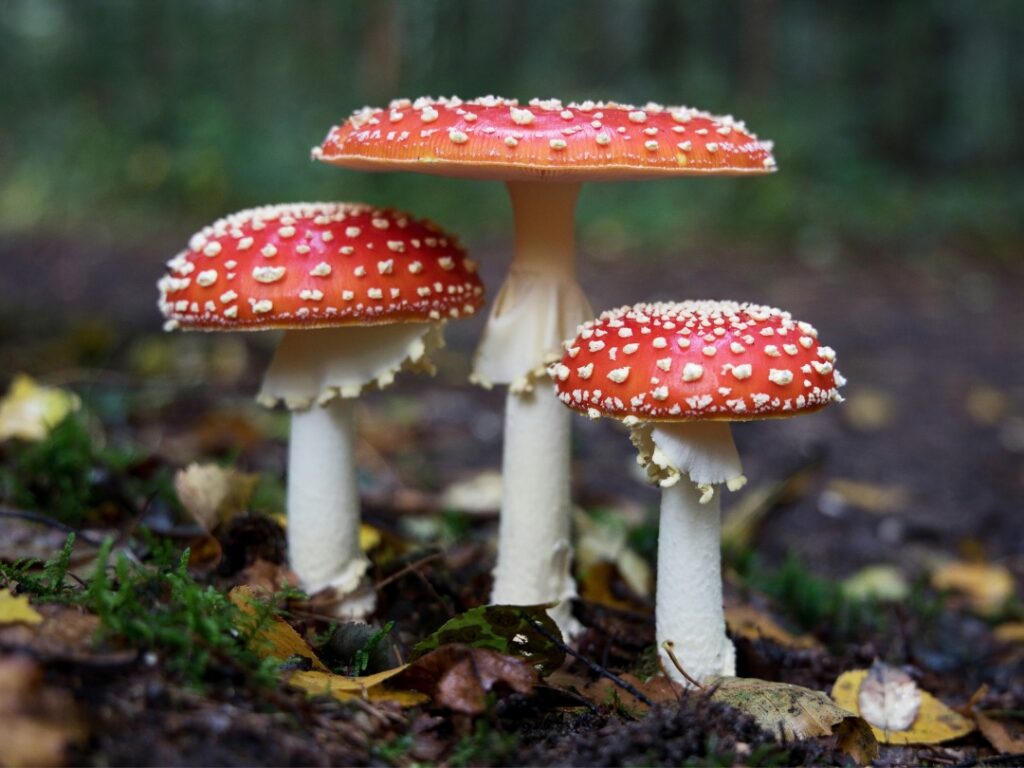
Image credit: Photo by Hans Veth on Unsplash
What to look out for:
- Bright red or orange-red caps.
- Distinctive white spots.
- Often found growing beneath birch, pine and other trees.
Not all tree fungi are bad
Not all tree fungi are bad and many are simply carrying out their role as nature’s recyclers. Some fungi are important decomposers, others have beneficial relationships with trees and play an essential role in helping them access nutrients and water.
If you spot a fungus growing directly from the trunk, around the base of a mature tree or from a major branch, it is worth taking note. This is particularly important if the tree is located close to a property, road, footpath or other area where people regularly pass. Species such as Earthstars, waxcaps and a wide range of woodland mushrooms help break down organic material and support healthy soil ecosystems. Others form beneficial relationships with tree roots, helping to create healthier and more resilient woodland environments.
Concerned about fungi on your tree?
If you have spotted an unusual mushroom or bracket fungus growing on one of your trees, our experienced and qualified team can help assess its condition and advise on the most appropriate next steps. A good first step is to take a photograph and email it to us, we can then arrange an appointment for one of our professional team to inspect the tree, get in touch to find out more.