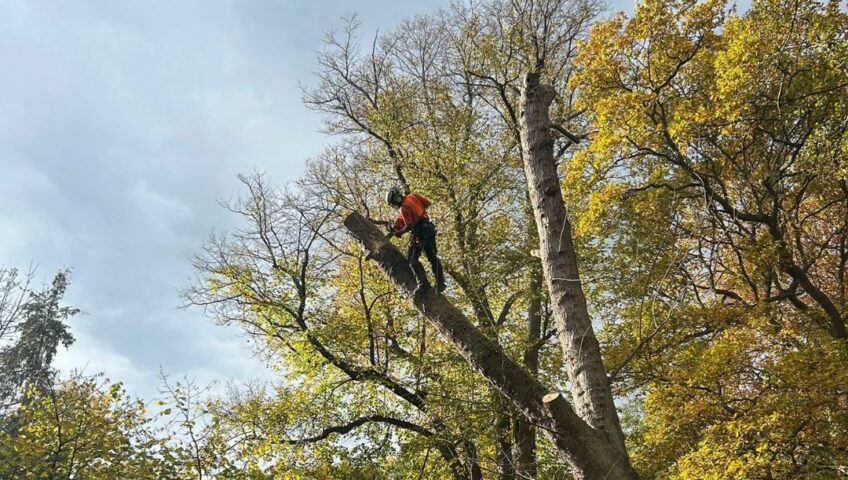
As summer starts to draw to a close, many homeowners begin thinking about tidying their gardens and preparing for the wetter, windier months ahead. While fences, gutters and roofs are often at the top of the to do list, trees can sometimes be overlooked. Autumn storms can place significant stress on trees, particularly those that have become overgrown, weakened by disease or damaged during the summer months through lack of water or significant growth.
Taking proactive steps now can help reduce the risk of falling branches, property damage and costly emergency work later in the year. In this guide, we’ll explain how to prepare your trees for autumn storms and what you need to know if your tree is protected by a Tree Preservation Order (TPO) or if your property is located with a conservation area.
Why autumn storms can be problematic for trees
Strong winds, heavy rain and waterlogged soil can all affect the stability of trees. Even healthy specimens can lose branches during storms, while trees with structural weaknesses are at a much greater risk. Common issues might include, dead or damaged branches breaking off in high winds, dense canopies acting like sales, root systems becoming unstable and existing cracks or decay worsening under storm conditions. Identifying and addressing these issues before autumn arrives can help keep your property and family safe.
Remove Deadwood and Weak Branches
One of the most effective ways to prepare trees for stormy weather is to remove dead, diseased or weak branches. Deadwood is more likely to snap during high winds, creating a potential hazard for people, vehicles and nearby structures. Selective pruning can also improve airflow through the canopy, reducing wind resistance and helping the tree withstand strong gusts more effectively. However, pruning should always be carried out correctly. Excessive or poorly executed pruning can weaken a tree and create additional problems in the future.
Consider Crown Management
For some trees, crown thinning or reduction may be beneficial before the autumn and winter season. These techniques can reduce wind loading on the canopy, remove structurally weak branches, improve overall tree health and maintain safe clearance from buildings, roads and footpaths The appropriate approach will depend on the species, age and condition of the tree, we can help guide on the best way forward.
Don’t Ignore Trees Close to Buildings
An annual inspection is a sensible approach for most homeowners, particularly if trees are located near buildings, roads, driveways or areas regularly used by people. An inspection will identify potential issues early and help avoid costly emergency work following storms.
What is a tree preservation order (TPO)?
Before carrying out any work on a tree, it is important to establish whether it is protected by a Tree Preservation Order (TPO). A Tree Preservation Order is put in place by a local authority to protect trees (generally anything over 75cm at 1.2m tall) that provide significant public amenity value. Once a tree is protected, it is generally illegal to cut it down, wilfully damage or destroy it without obtaining permission from the local planning authority.
Many homeowners are unaware that a tree on their own property may be protected, so it is always worth checking before arranging any work. Your local council can confirm whether a tree is covered by a TPO or located within a conservation area. You can trim back a tree with a TPO, but you will need permission first. You will need to submit an application, the council will assess whether the work is appropriate. Carrying out unauthorised work on a protected tree can lead to substantial fines and enforcement action.
Prepare now for a safer autumn
If you are concerned about a particular tree or area we can help you assess the health of the tree and structural conditions. The best time to prepare your trees for autumn storms is before severe weather arrives, so over the next few weeks. A simple inspection today could help prevent property damage, improve tree health and give you peace of mind throughout the autumn and winter months.
If you have concerns about the condition of a tree on your property, or you’re unsure whether it is protected by a Tree Preservation Order, get in touch to see how we can help.
FAQs about preparing trees for autumn storms
How do I prepare my trees for autumn storms?
The best way to prepare your trees for autumn storms is to have them inspected for dead, diseased or damaged branches that could fail during high winds. Pruning weak growth, removing deadwood and addressing any structural issues before storm season can help reduce the risk of damage to your property and improve the tree’s health.
What are the signs that a tree may be dangerous?
Warning signs include dead branches, cracks in the trunk, fungal growth around the base, hollow areas, significant leaning, exposed roots and branches overhanging buildings or public spaces.
When is the best time to prune trees before winter?
Late summer and early autumn are often the best times for tree inspections and certain types of pruning. However, the ideal timing depends on the tree species, its condition and the type of work required. Some trees are best pruned during their dormant season, while others may benefit from earlier intervention.
Can strong winds damage healthy trees?
Yes, although healthy trees are generally more resilient, severe weather can cause branches to fail or, in extreme cases, uproot trees. Trees with dense canopies, structural weaknesses or shallow root systems may be particularly vulnerable during autumn storms.
How do I know if my tree has a Tree Preservation Order (TPO) or if my property is located within a conservation area?
You can check with your local council’s planning department or online planning portal. A Tree Preservation Order/ Conservation area protects specific trees that provide public amenity value and restricts the work that can be carried out without permission.
Can I prune a tree that has a Tree Preservation Order?
In most cases, you will need permission from your local authority before carrying out pruning work on a protected tree or if your property is located in a conservation area. Applications are usually required for crown reductions, crown thinning and other significant works, always check before arranging any work to avoid potential fines.
What happens if I cut back a protected tree without permission?
Unauthorised work on a tree protected by a Tree Preservation Order can result in enforcement action and significant financial penalties. If you’re unsure whether your tree is protected, seek advice before carrying out any work.
Are dead branches exempt from Tree Preservation Order restrictions?
Certain exemptions may apply for dead branches or trees that pose an immediate safety risk. However, the burden of proof rests with the tree owner and it is often advisable to document the condition of the tree and seek professional guidance before proceeding.